Seminar on Media and Information Literacy Held at KAFU
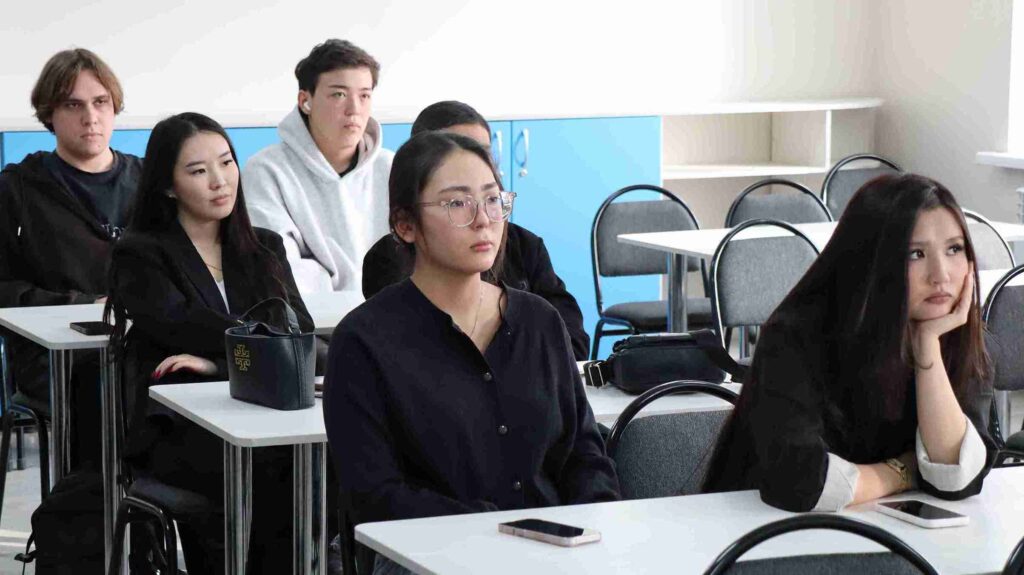
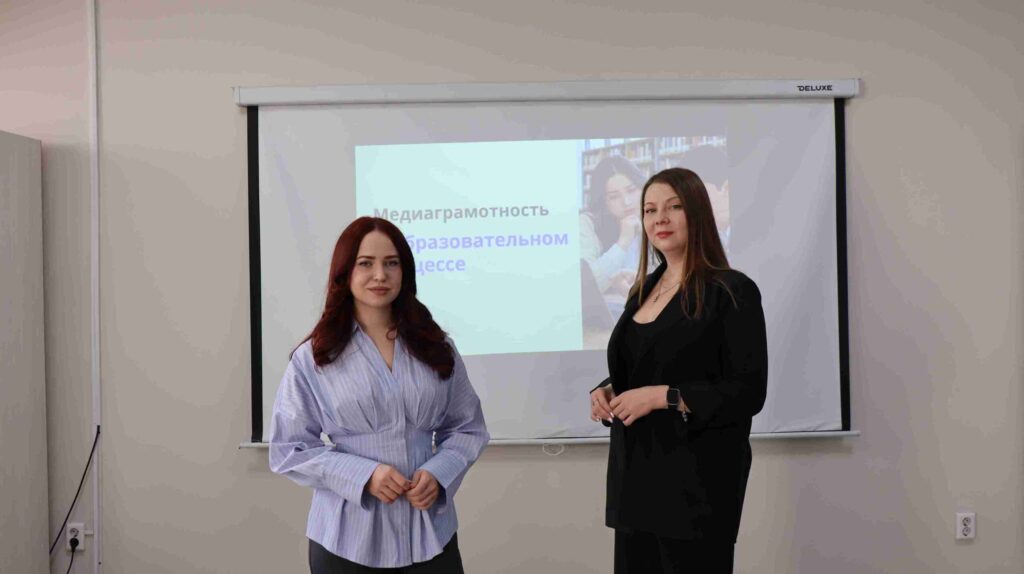
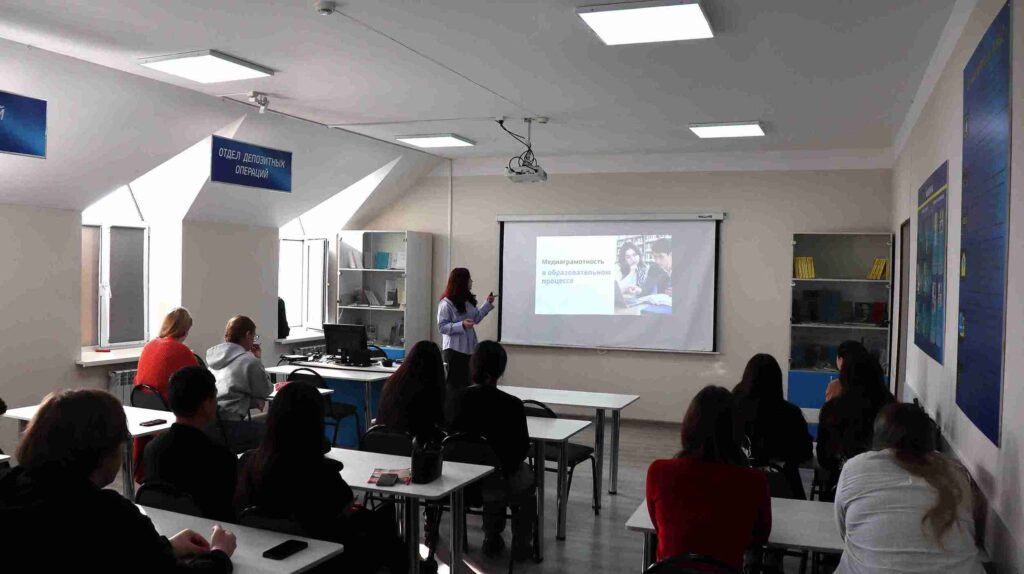
On November 16, 2026, the Kazakh-American Free University (KAFU) hosted a seminar titled “Media Literacy in the Educational Process” for students enrolled in the “Journalism,” “Pedagogy and Methodology of Primary Education,” “Russian Language and Literature,” and “Kazakh Language and Literature” educational programs.
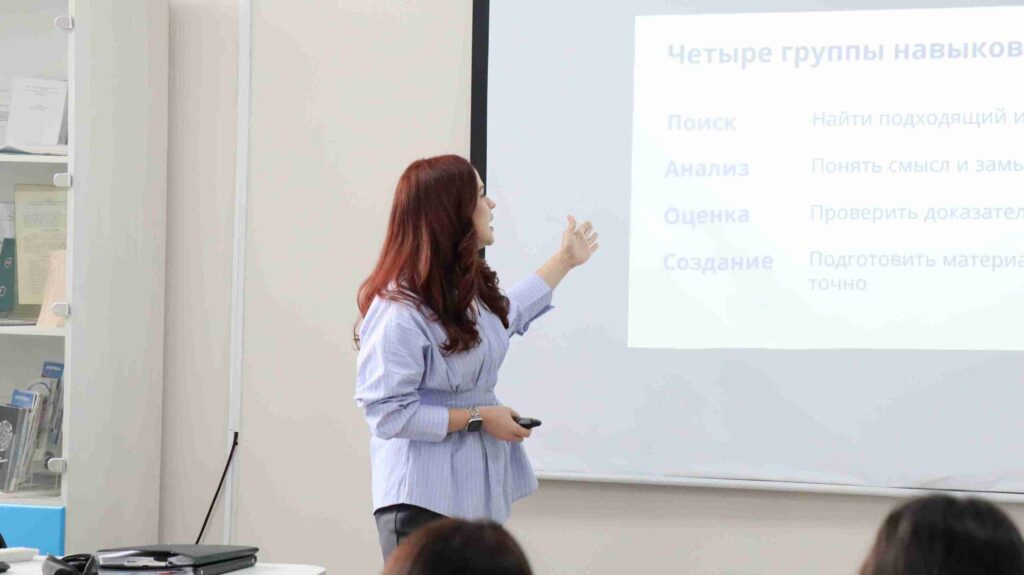
The seminar was led by Inessa S. Demyanova, a teacher-moderator and instructor of Russian language and literature at the “Regional Specialized School-Lyceum for Gifted Children in Mathematics, Physics, and Computer Science.”
Before the seminar, Inessa S. Demyanova participated in a training program titled “Integrating Media and Information Literacy into the Educational Process,” held in Astana from October 27–29, 2026. This training was organized by the “MediaNet International Journalism Centre” (a public foundation) with support from The Nippon Foundation, and was designed to enhance the professional competencies of educators by introducing practical methods for incorporating media and information literacy into various academic subjects.
Inessa S. Demyanova shared the knowledge and practical tools she acquired with the KAFU students. During the seminar, participants explored the core components of media and information literacy; learned to distinguish between facts, opinions, and assumptions; analyzed media messages—identifying their authors, intended audiences, and objectives—and practiced evaluating evidence and verifying information through independent sources. Special attention was given to the “lateral reading” technique, which involves verifying a source by looking beyond the website or publication itself.
Another timely topic addressed during the session was the use of artificial intelligence in academic work. The students discussed the necessity of verifying AI-generated information—including names, dates, quotes, and references—against primary sources, as well as the importance of using such tools responsibly and transparently within the educational process.
The seminar was highly practical in nature. Participants examined case studies, analyzed news reports and headlines, explored methods for verifying information, and developed short exercises designed to foster media literacy—activities that could be integrated into various school subjects. The future educators were provided with examples tailored for lessons in Russian language, literature, history, mathematics, and the natural sciences.
The seminar enabled students at KAFU to acquire modern techniques for working with information, demonstrating how skills in critical media analysis, fact-checking, and the responsible use of digital tools can be applied in their future professional careers.