KAFU Discussed Artificial Intelligence at the Plenary Session of the XV Forum of Young Scientists
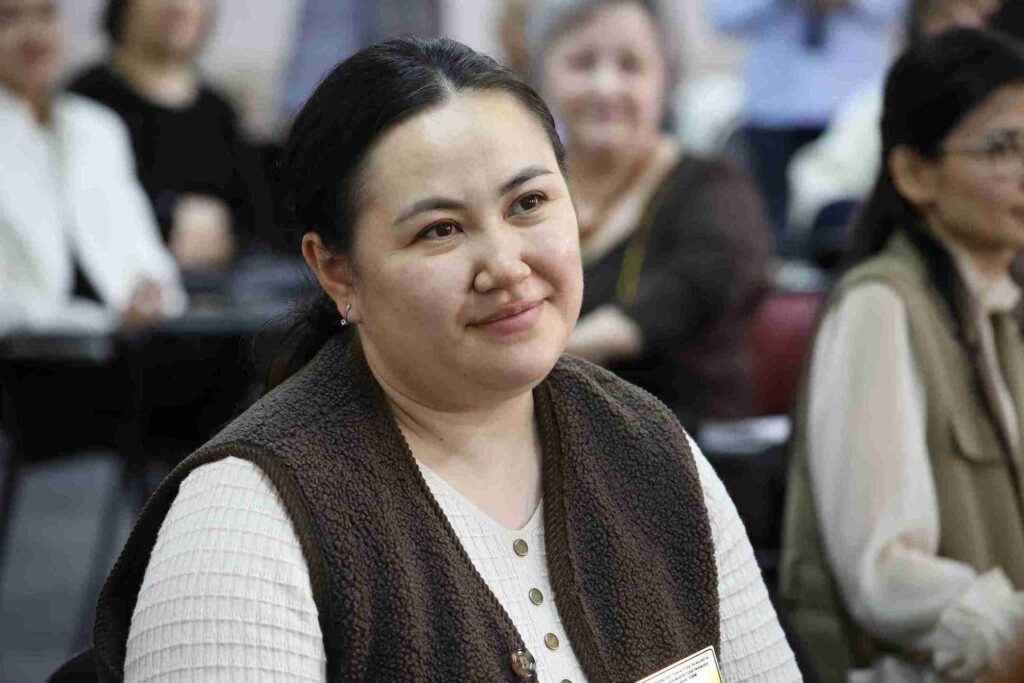
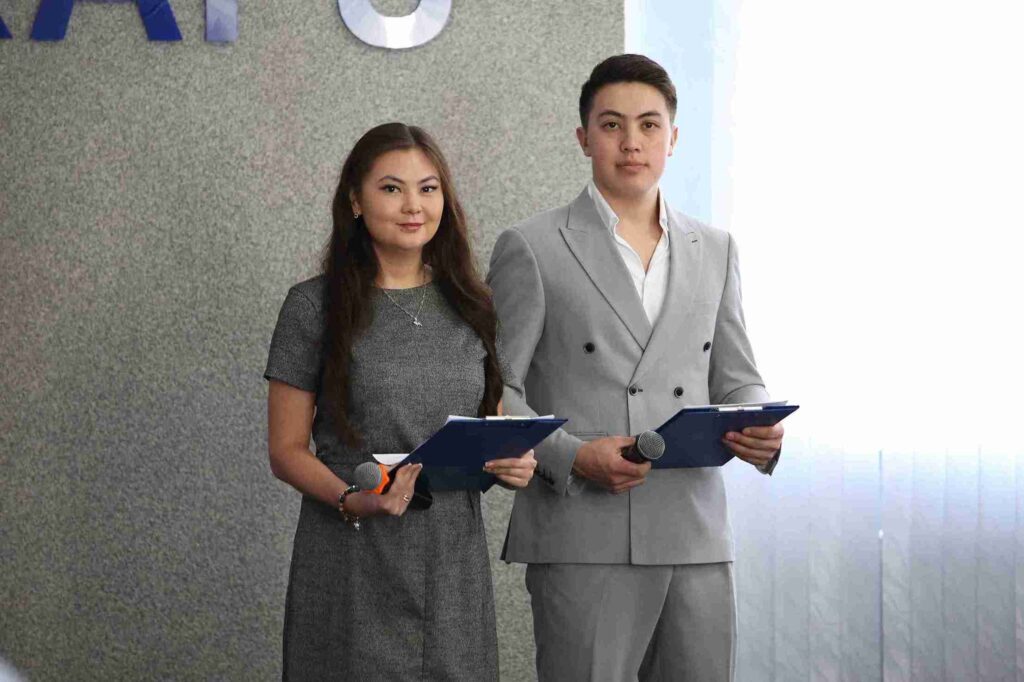
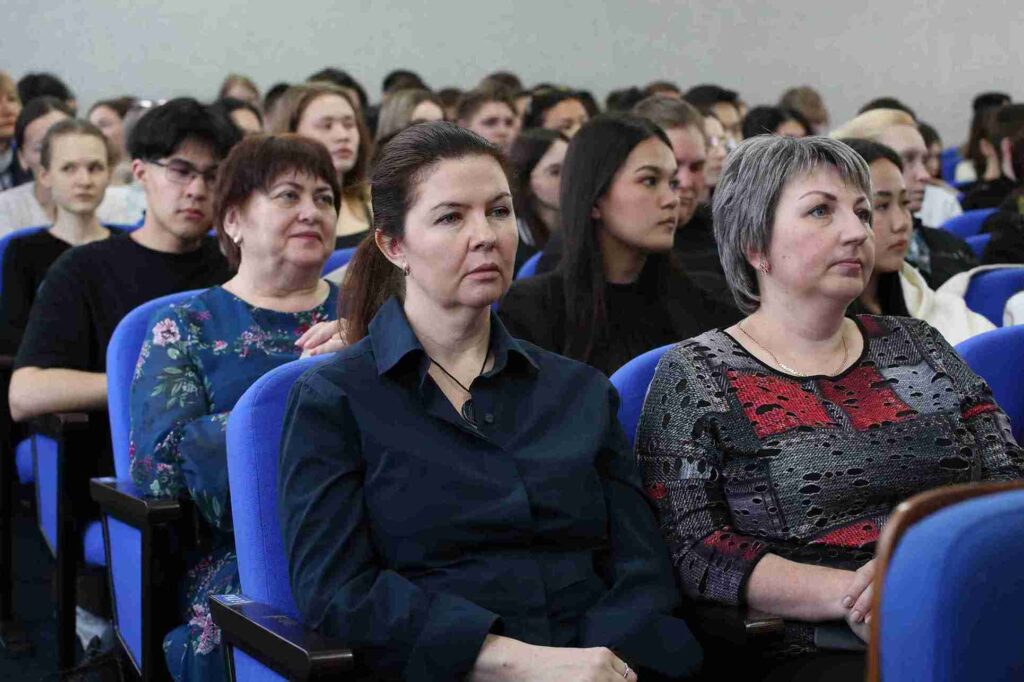
On April 11, 2025, the plenary session of the XV International Forum of Young Scientists “Modern Scientific Directions: from Applied Research to Innovations” was held at the Kazakh-American Free University. Young researchers from Kazakhstan, Russia and Uzbekistan presented their scientific papers devoted to the influence of artificial intelligence on various spheres of life.
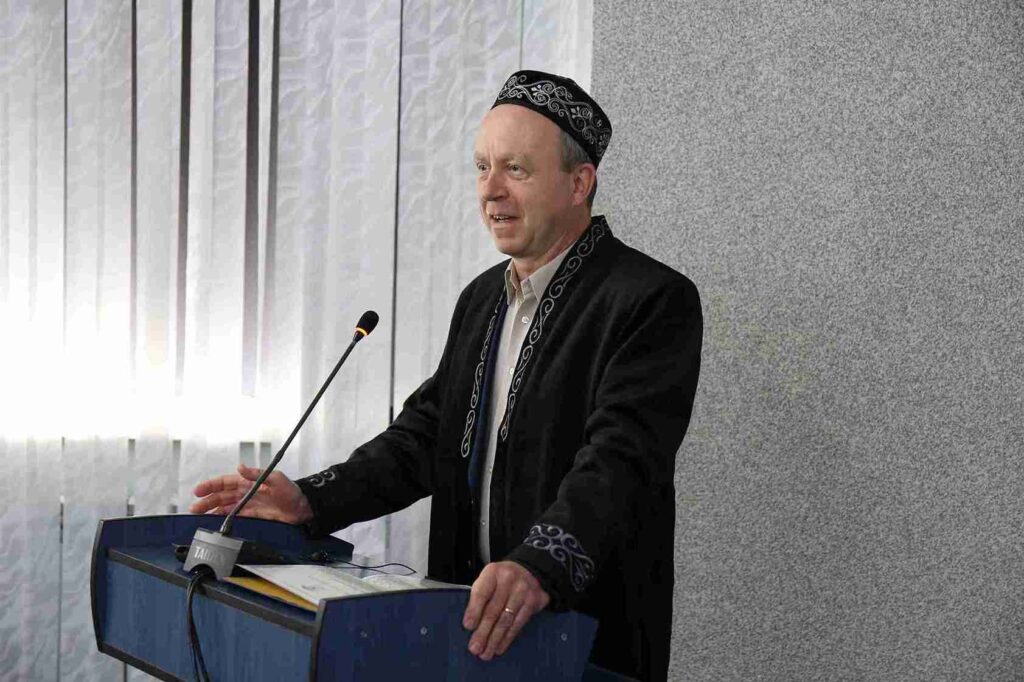
The official part was opened by the President and founder of KAFU, Academician of the National Academy of Sciences of the Republic of Kazakhstan under the President of the Republic of Kazakhstan Yerezhep A. Mambetkaziyev. He addressed the participants with a greeting, emphasizing the significance of scientific initiatives of young people and the importance of international academic cooperation.
A special moment of the ceremony was the honoring of the delegation from Germany. The event was attended by KAFU partners from German universities, within the facilities of which academic mobility programs, foreign internships and double-degree education are implemented. The guests were greeted to the applause of the audience, and the delegation was headed by Professor G-H. Brauweiler, who is celebrating his anniversary this year.
The first to speak online was Ilya Kalabin, a student of the Siberian University of Consumer Cooperatives (Novosibirsk, Russia). His report “Actual Problems of Financial Market Transformation in the Era of Global Digitalization” was prepared under the supervision of PhD in Economics, Associate Professor Natalia V. Koloskova. Ilya presented an analysis of changes in the financial sector, emphasizing how AI affects the dynamics of the digital economy. The expert assessment of the report was given by Yulia V. Trofimova, Senior Research Lecturer of the KAFU Business Department.
Artem Glushakov, a student of KAFU, spoke in English on the topic “The Application of Artificial Intelligence Technologies in the Development of the Tourism Potential of the Republic of Kazakhstan”. Under the scientific supervision of doctoral student Eldar Mubarakov, he spoke about the use of AI in the tourism industry – from demand forecasting to route personalization. A commentary on the report was given by KAFU doctoral student Stefan Noack, a teacher at the University of Applied Sciences in Zwickau.
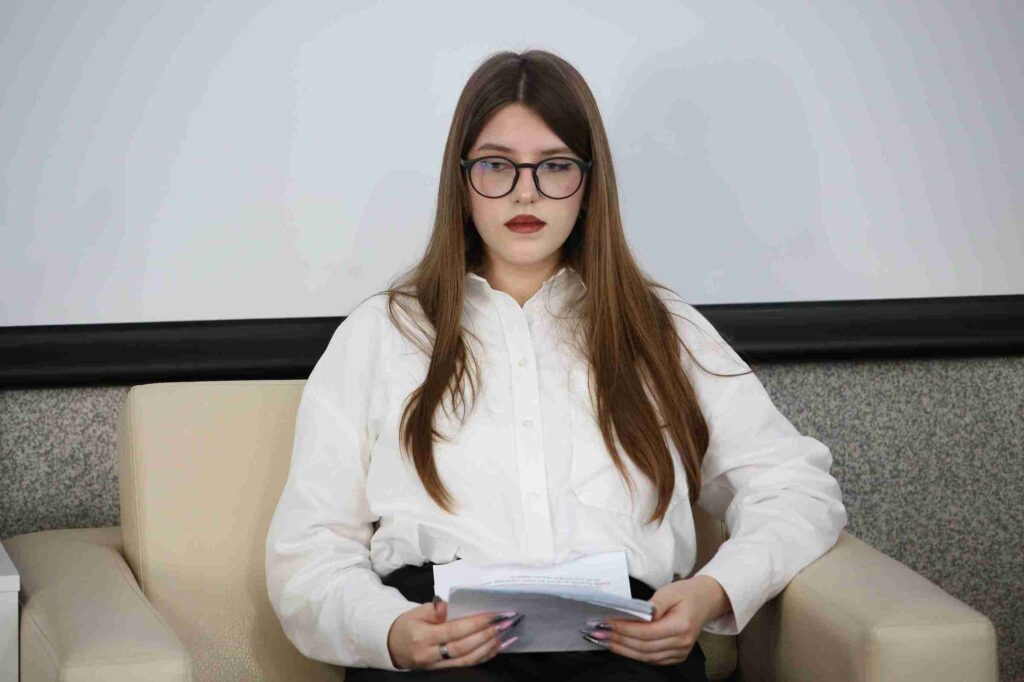
Polina Kuznetsova, a student of the educational program “Psychology” at KAFU, presented a report “Artificial Intelligence as a Means of Combating Stress in Students”. Under the supervision of PhD in psychology Lilia N. Glushkova, she considered the possibilities of digital tools to support the psycho-emotional state of students. An expert, master’s student, senior lecturer of the Department of Pedagogy and Psychology of KAFU Irina A. Fedorova shared her opinion.
The team report “Potential Threats of Artificial Intelligence in Teaching” was presented by KAFU students: Alexandra Masko, Karina Argingazina and Alexandra Kiy. Under the guidance of teacher Polina A. Kulik, they considered the risks of introducing AI into the educational process, including a decrease in the level of critical thinking and legal challenges. The commentary was provided by the head of the Department of Foreign Languages, Yulia V. Novitskaya.
Particular attention was attracted by the participation of Guzalya Rzayeva, a doctoral student at the Tashkent State University of Law, who spoke online with a report “The Future of Artificial Intelligence in Labor Relations”. The work was carried out under the guidance of Doctor of Law Bakhodir M. Khamrakulov. The expert assessment was presented by PhD, Associate Professor of KAFU Dinara Z. Kozhuganova.
Also, PhD, associate professor and researcher at KAFU Botagoz A. Umitchinova, was taking part in a parallel conference at the Tashkent State University of Law. Despite her busy schedule, she found an opportunity to connect and support her colleagues – this became a vivid example of lively international scientific interaction in real time.
The report by Anastasia Maximova, a student at KAFU, on the topic “Artificial Intelligence as a Subject or Instrument of Creativity: Legal Aspects of Regulating Intellectual Property” was prepared under the supervision of teacher Aziza S. Kenzhebek and touched upon the issues of authorship and legal rights to the results of AI “creativity”.
The plenary session was concluded with a substantive work by Sairash Daulet, a master’s student at KAFU, in the Kazakh language – “Kazakh Language and Intelligence: the Development of the Kazakh Language in the Digital Era”. The report, prepared under the supervision of Nursulu K. Turgumbaeva, examined the prospects for the development of the Kazakh language in the digital era. Commentary on the speech was given by PhD, professor at KAFU Assem N. Nurlanova.
The final chord of the plenary session was the summing up and presentation of an important agreement concluded the day before. On April 8, a Memorandum of Cooperation was signed between the Kazakh-American Free University and the Institute of Parliamentarism, which became a symbol of the unification of scientific potential and legislative expertise. The information about the signing of the document was presented by the head of the Department of Law and International Relations of KAFU, PhD Kairat O. Alembayev. He noted that the Institute of Parliamentarism, operating under the Department of Logistics and Technical Support of the Parliament of the Republic of Kazakhstan, performs a vital function – it provides scientific support for legislative initiatives, develops texts of bills and proposes reasonable changes to current legislation.
Partnership with such an institute opens up new horizons for KAFU: not only in the field of scientific research, but also in the training of competent specialists capable of working at the intersection of science, education and public policy.
The executive director of the Institute of Parliamentarism, candidate of legal sciences, associate professor Almas K. Kanatov made a response speech, expressing confidence in fruitful cooperation and interest in developing joint projects with the university.
The plenary session was held on the eve of Science Day of the Republic of Kazakhstan, which emphasizes the importance of supporting young scientists and the relevance of artificial intelligence in modern scientific discourse. The event became a vivid example of how science unites generations, countries and academic communities for the sake of a common future.
Research Department