Constitution and Investment: Business Simulation Held for Students at KAFU
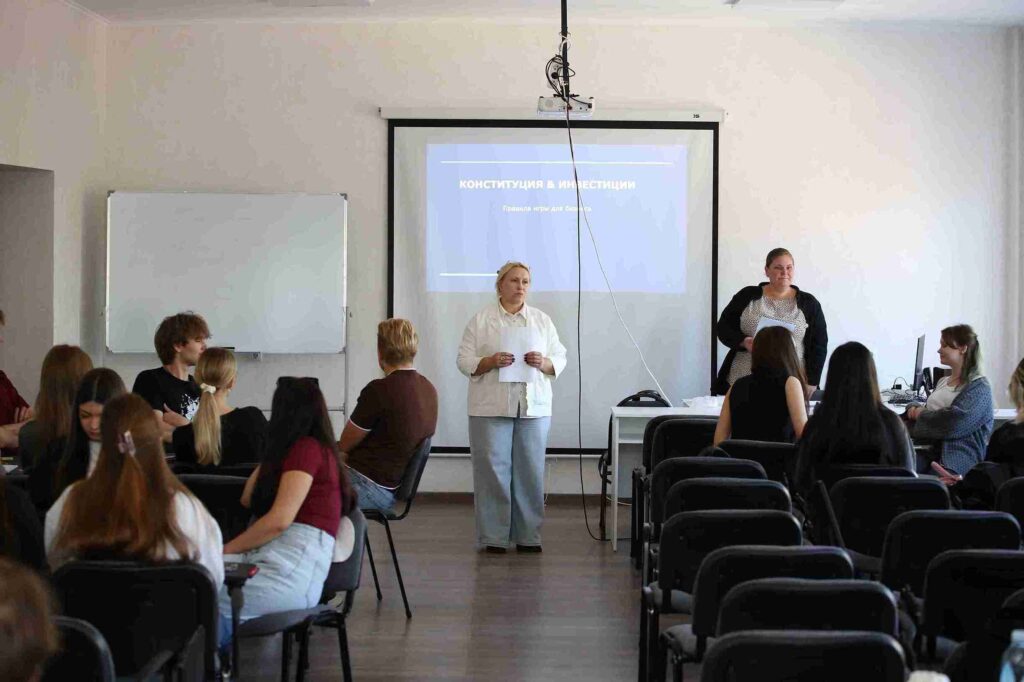
On September 23, 2026, the Kazakhstan-American Free University hosted an interactive business simulation titled “Constitution and Investment: Rules of the Game for Business.” The event was organized as part of the initiative to explain the provisions of the Constitution of the Republic of Kazakhstan and aimed to enhance students’ legal, financial, and entrepreneurial literacy.
The speakers at the event were E. E. Sumareva, Senior Lecturer-Researcher at the Department of Business, and O. B. Leyman, Senior Lecturer.
The participants explored the Constitution not only as the fundamental law of the state, but also as a foundation for economic relations, the protection of private property, freedom of entrepreneurship, and investment activities.
At the beginning of the event, students were invited to imagine themselves as potential investors and identify the conditions necessary for investing in a new business project. Among the most important factors, the participants highlighted property protection, legislative stability, clear tax regulations, enforcement of contracts, and access to judicial protection.
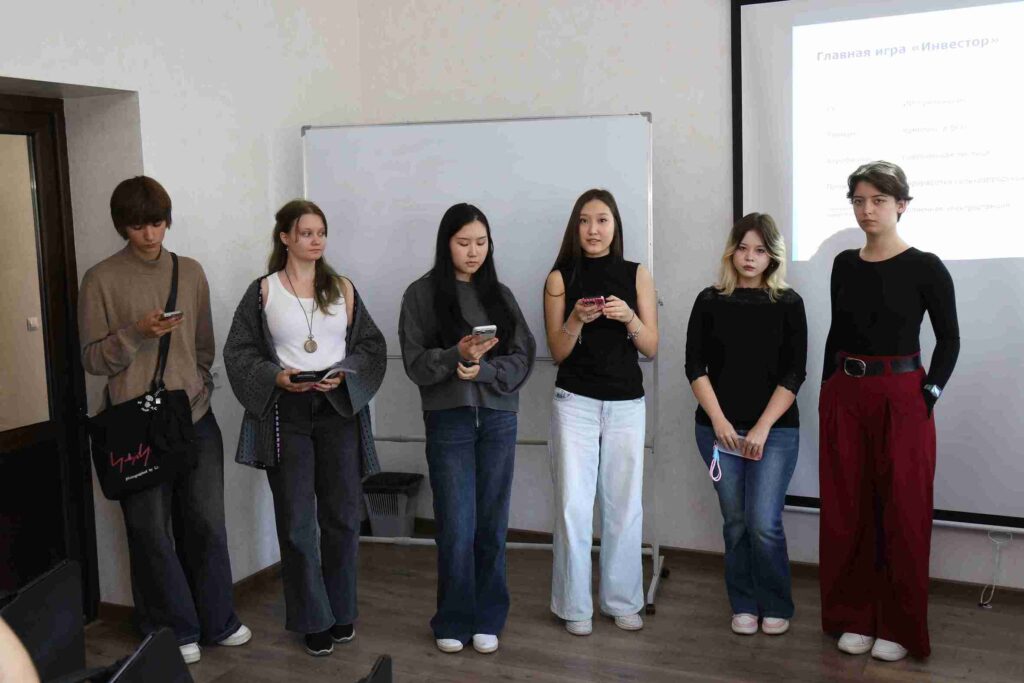
The central part of the event was the “Investor” business simulation. The students were divided into teams and assigned projects in various fields, including information technology, tourism, agribusiness, manufacturing, and green energy. Each team assessed the prospects of its project, potential risks, and the legal safeguards required for its implementation.
During the simulation, participants received cards describing changing circumstances, including government support, market demand, changes in legislation, disputes with contractors, the need to obtain additional permits, and an increase in investment volume. After each scenario, the teams discussed which legal or management mechanisms could help protect the project and ensure its continued implementation.
The business simulation provided a practical way to demonstrate the relationship between the Constitution, citizens’ rights, entrepreneurship, investment, and the country’s economic development. The interactive format allowed students not only to become familiar with legal provisions but also to apply them when addressing specific economic situations.