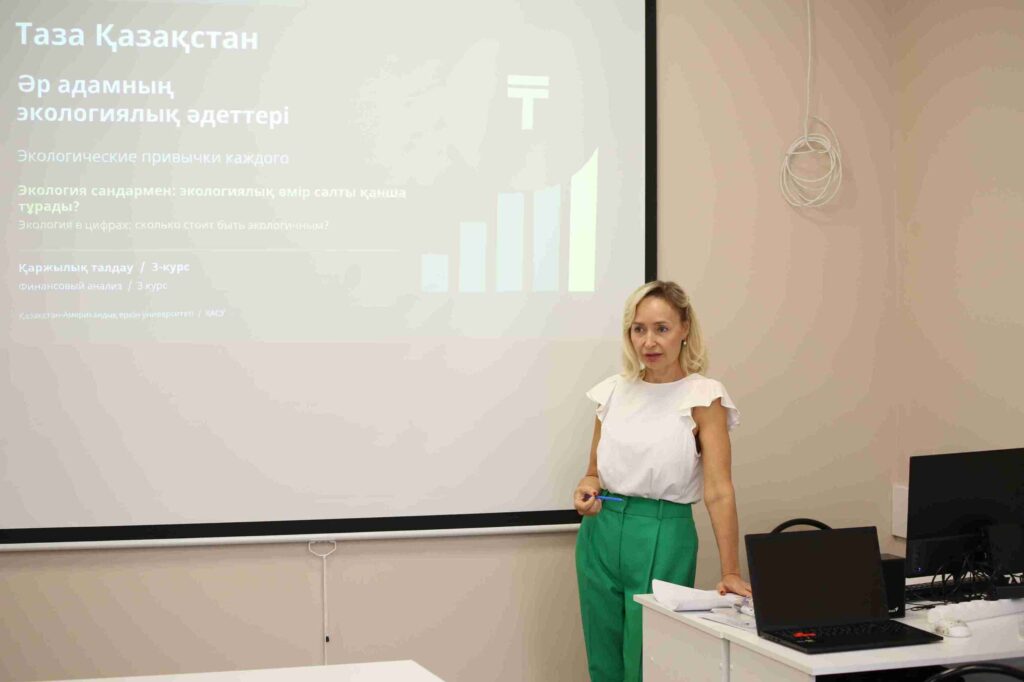
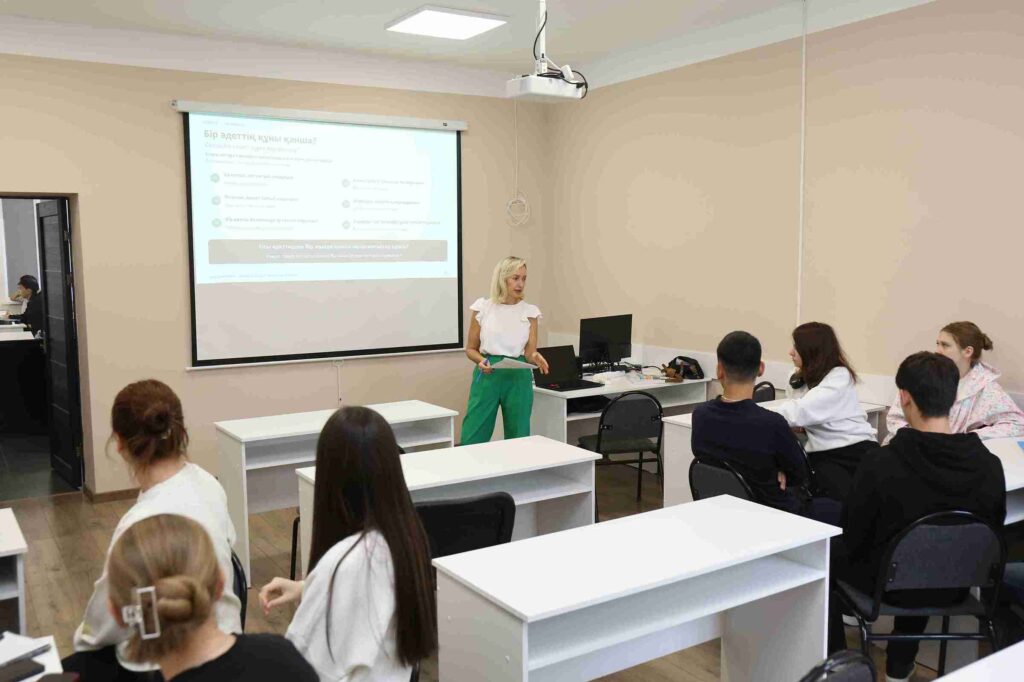
Ecology in Numbers: KAFU Hosts “Taza Qazaqstan: Everyone’s Environmental Habits” Eco-Quiz
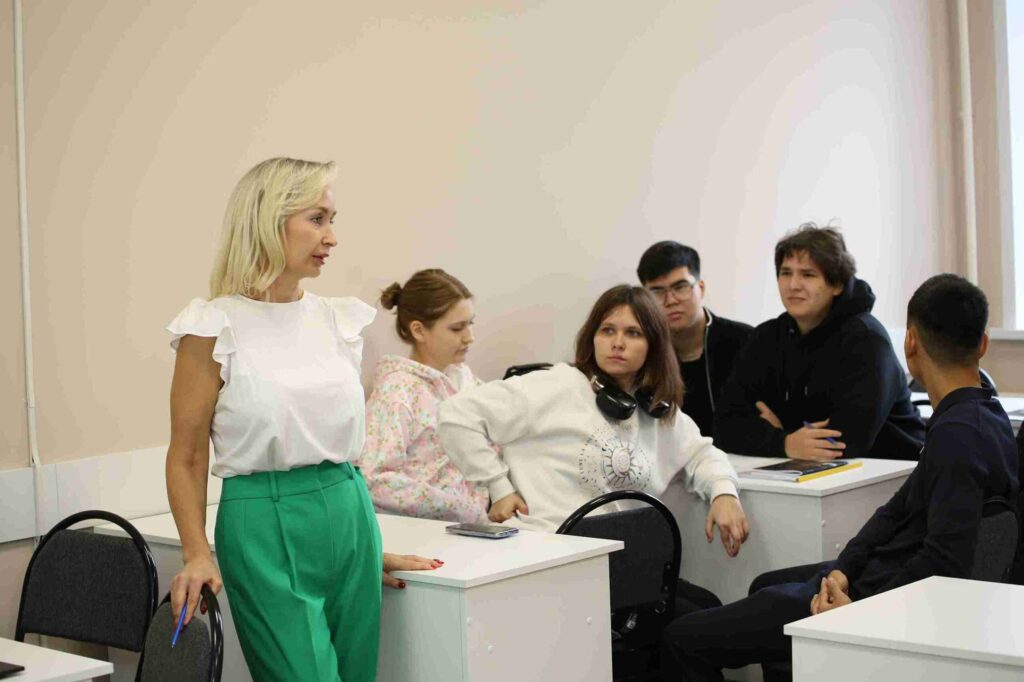
On November 25, 2026, the Kazakh-American Free University (KAFU) hosted an educational eco-quiz titled “Taza Qazaqstan: Everyone’s Environmental Habits” for third-year economics students, as part of the “Taza Qazaqstan” (Clean Kazakhstan) initiative.
Organized by Yulia V. Trofimova, a senior lecturer in the Department of Business, the event was integrated into the “Financial Analysis” course. It aimed to foster an environmental culture and responsible consumption, while simultaneously developing the students’ financial literacy and analytical thinking.
A unique feature of the eco-quiz was its synthesis of environmental themes with the professional training of future economics specialists. During the team-based competition, students were tasked with evaluating environmental habits from a financial and economic perspective, analyzing the consequences of inefficient resource use, and determining the economic viability of various environmental initiatives.
The program consisted of five thematic rounds:
“Ecology and Finance: Intellectual Blitz”;
“Environmental Myths: True or False?”;
“The Money We Throw Away”;
“Battle of the Financial Analysts”;
“The Green Investor.”
Special emphasis was placed on solving practical case studies involving the reduction of food waste, the rational use of resources, the analysis of operational costs, and the assessment of both enterprise profitability and the payback periods for environmental investments.
In the final round, students took on the roles of investment committee members; they curated a portfolio of environmental projects within the constraints of a limited budget and justified their choices based on both financial efficiency and environmental significance. The event was conducted in both Kazakh and Russian, ensuring equal opportunities for all students to participate.
The eco-quiz demonstrated that environmental responsibility is not only a key component of civic culture but also a significant factor in economic efficiency, corporate competitiveness, and the sustainable development of society.
Organizing such events helps integrate the principles of sustainable development into the educational process, fosters an environmentally responsible worldview among young people, and promotes an understanding of the importance of each individual’s personal contribution to environmental preservation.
“Taza Qazaqstan” (Clean Kazakhstan) — from daily habits to a sustainable future!
Department of Business